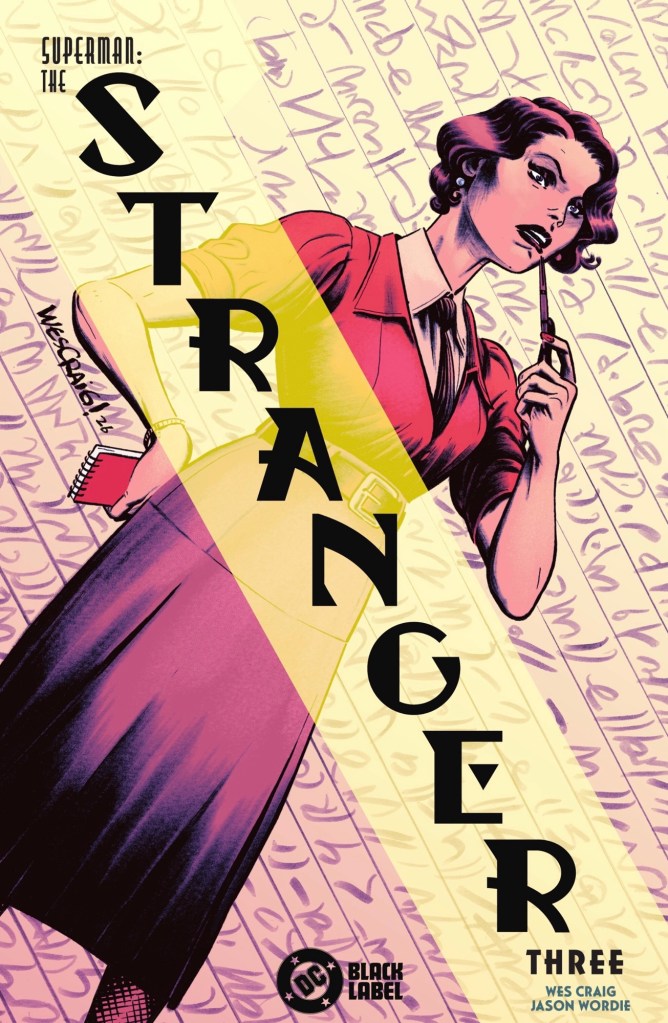
The third chapter of Wes Craig’s Thirties-set Superman tale begins with Clark reminiscing about his days in an orphanage. This Superman was never adopted, he stayed in the care system until he was dumped onto the streets at 18. We don’t learn the name of the friend he’s been addressing in his journal since the first issue, but we do see him.
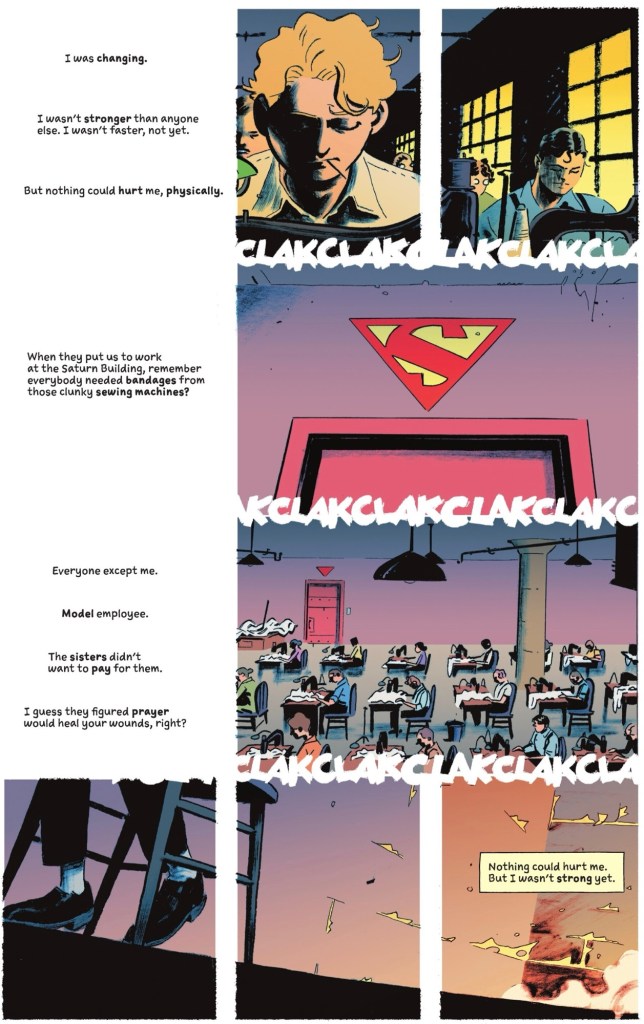
I think I’ll call him Pete. Poor, tragic Pete, there with Clark on the day a fire broke out, when the bosses had locked the workers inside because they ‘didn’t want us abusing our break time’.
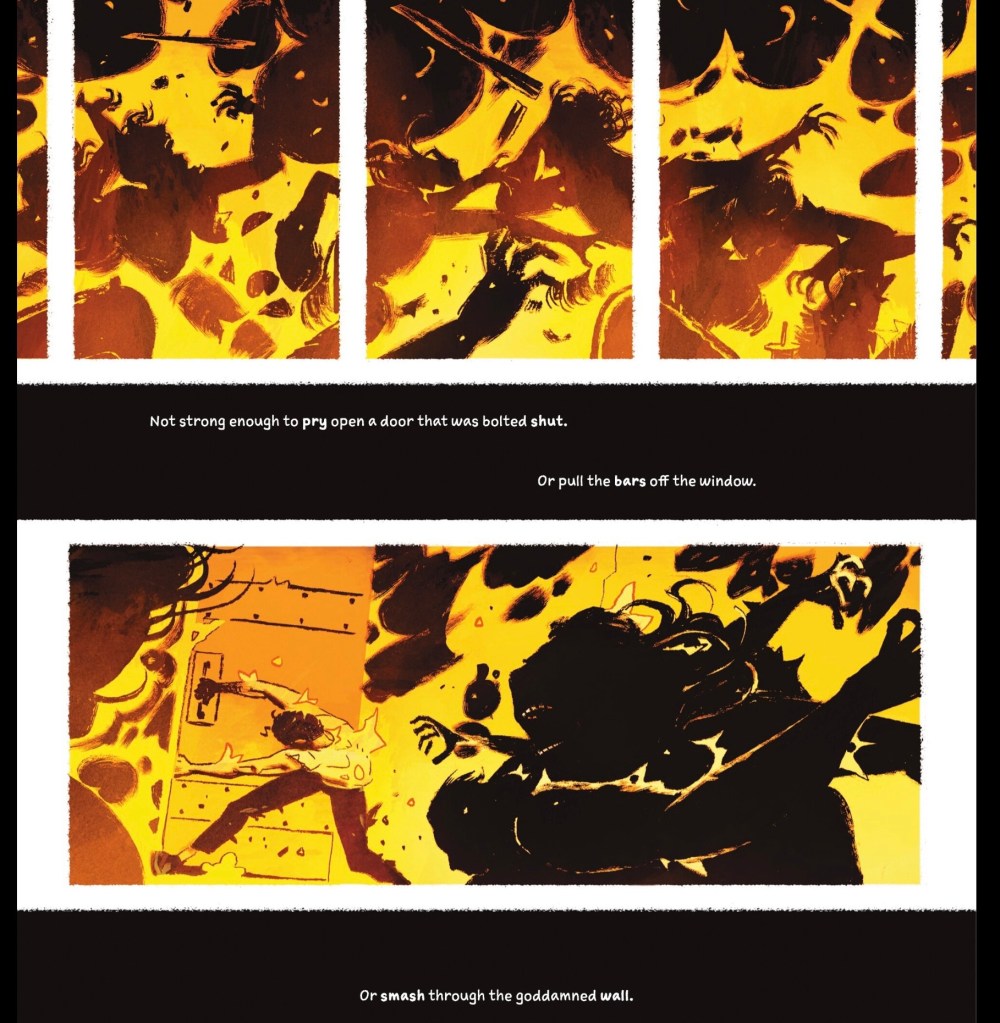
Clark, for the second time, is sole survivor of a massive tragedy. The awful injustice helped shaped his character, and that ‘S’ on his chest stands for anything but hope. It’s a reminder he has a lot of work to do.
In the present day, he’s doing it.
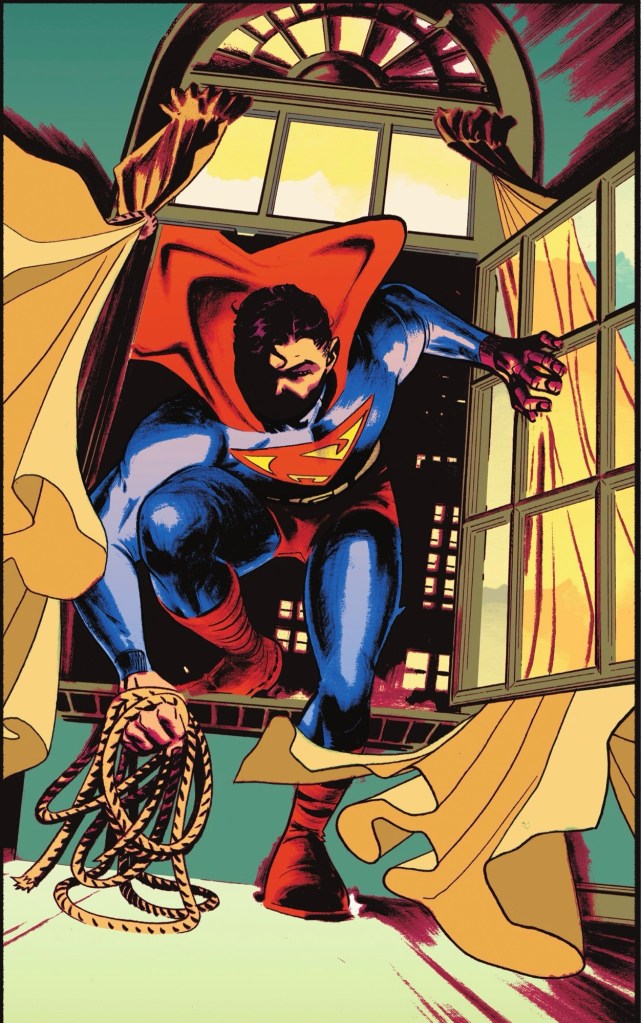
And another corrupt official bites the dust. Well, metaphorically – that rope’s for hanging, but only by the feet.
Later he visits someone rather less distasteful – Metropolis Star reporter Lois Lane, who’s never noticed Superman in his other identity of Clark Kent, mild-mannered janitor. It’s their first meeting.
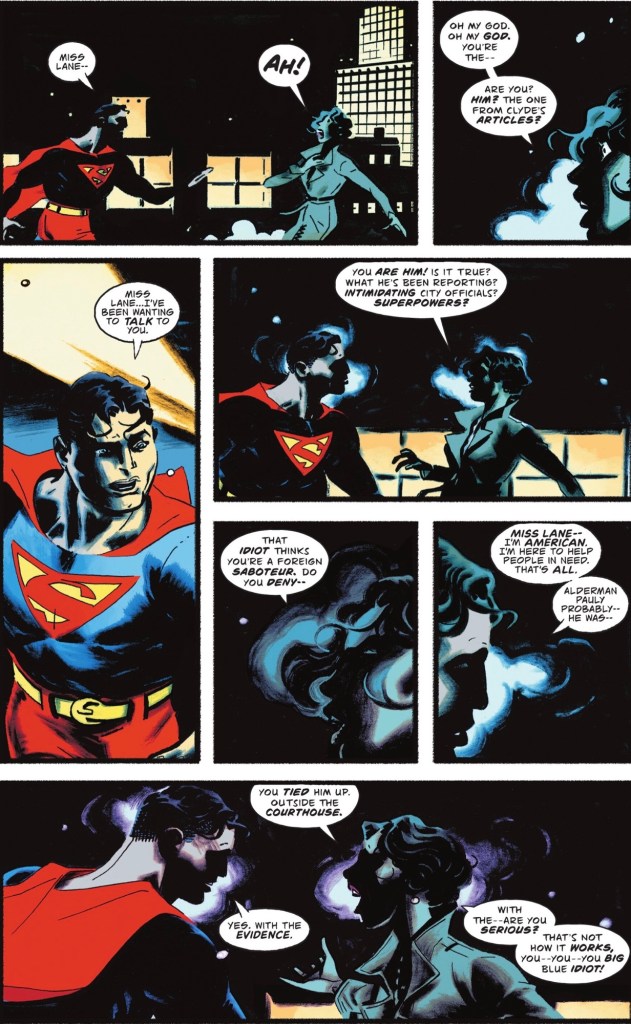
Hero asks girl if she’ll help steer him in his mission and while she wants to name the man at the top of the corruption ladder in Metropolis, he’s so powerful she’s afraid to speak his name.
The man himself, Lex Luthor, is having a meeting about the Man of Steel, who’s been getting in the way of his projects.
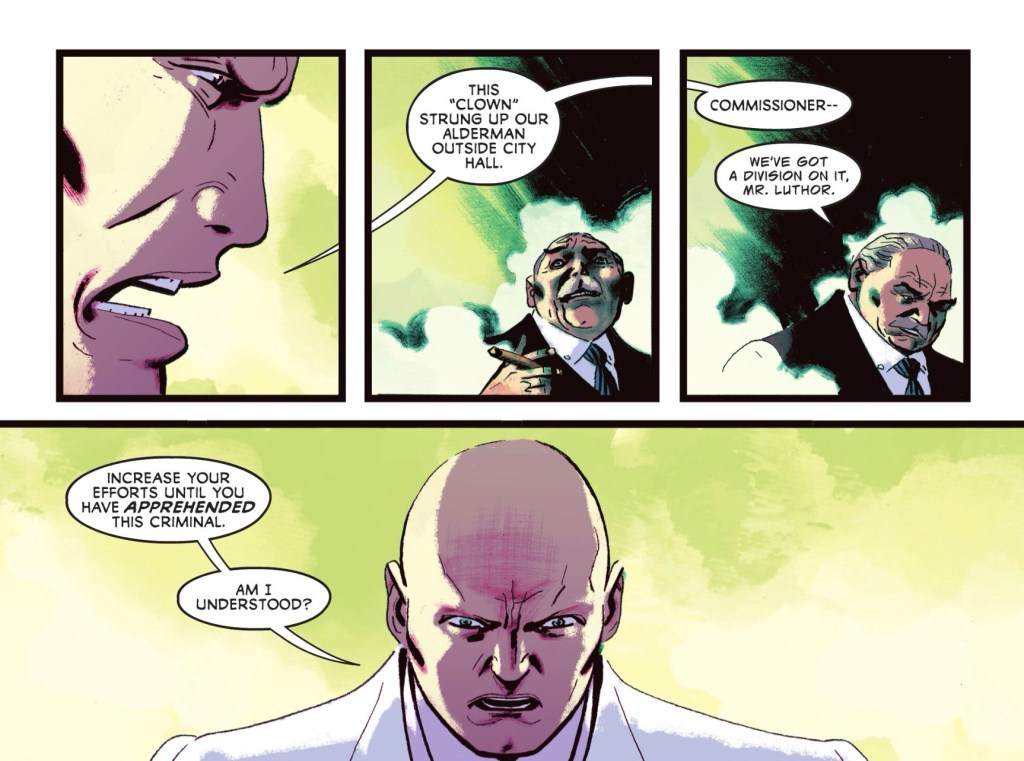
What his ‘partners’ don’t know is that Lex has been hearing a voice in his head, someone muttering about purity and vigilance.
Leaving the police chief and senator behind, Lex and his assistant go down to his secret lab to see some radioactive material his men have been collecting from across the planet.
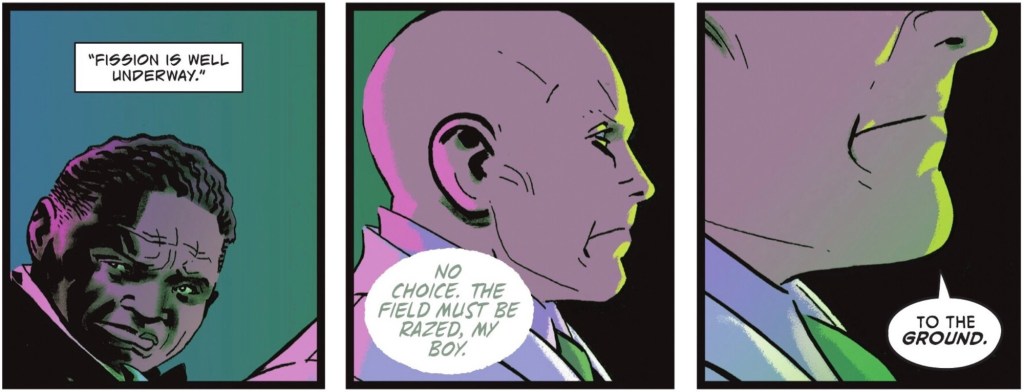
The glow alone tells you what he’s looking at.
But look at Lex’s man Marek; I’d love to know what he’s thinking. We’ve seen him speak for Lex, kill for Lex… but I can’t help thinking back to something Clark wrote earlier in the chapter.
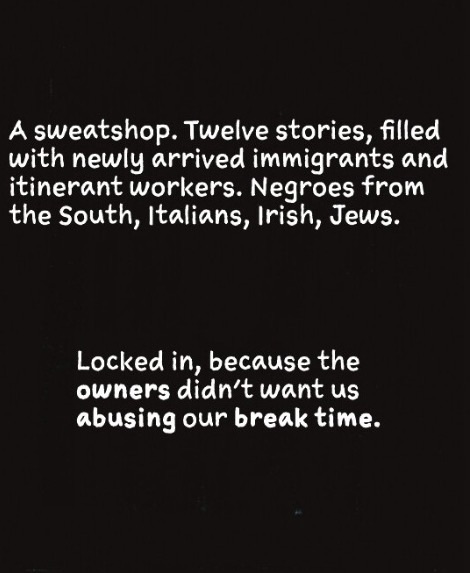
Something about the way writer/artist Craig places us with Marek when there’s no obvious narrative reason to position him so has me wondering.
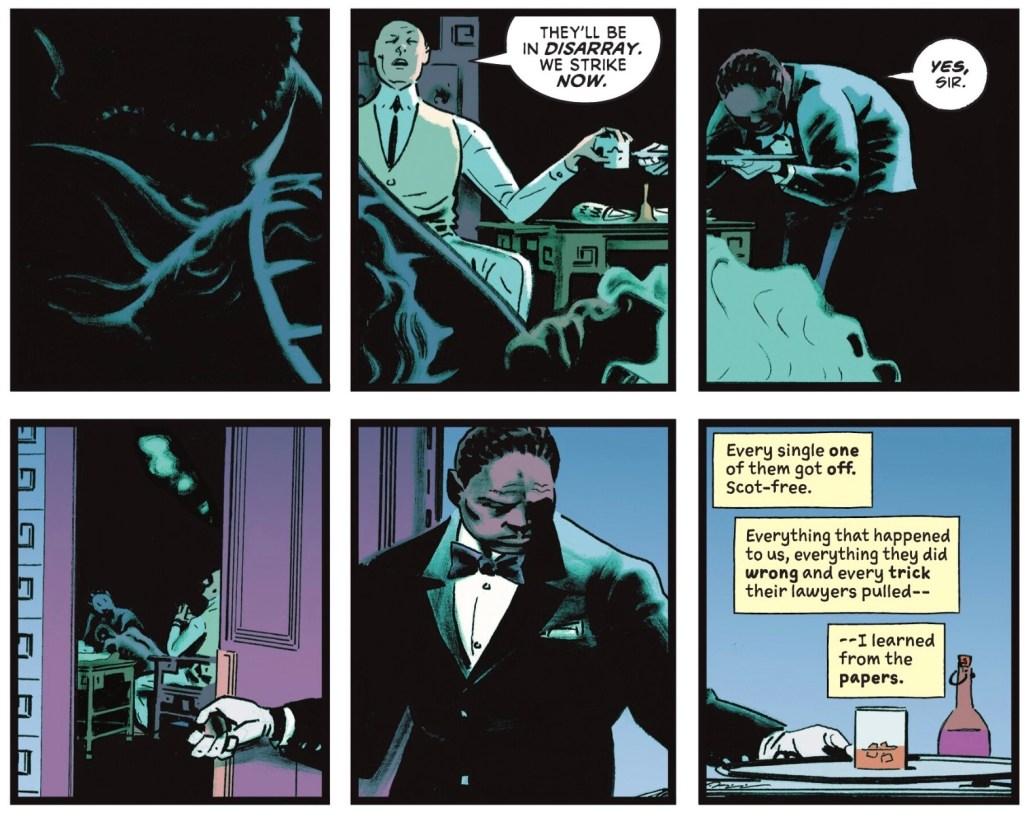
Did he lose someone in the sweatshop fire?
I’m intrigued by the story Craig is telling, but he’s as interested in the mood as he is in narrative, for example, spending almost a page on Lois lighting a ciggie, three panels on her going through a door and up a staircase; I’d rather the space were used for characterisation, maybe even a moment of humour, something this Black Label book sorely lacks.
Who’s that in Luthor’s head? My guess is the Ultra-Humanite, but that may be too obvious.
The pages are lovely to look at. Our hero and heroine have the vibe of Thirties movies stars, Robert Taylor and Claudette Colbert, maybe. Luthor looks otherworldly, unknowable. The staging is first rate, especially when Superman surprises Lois. The settings evoke the period convincingly, while Jason Wordie’s colours veer between naturalism and mood, quite the balancing act.
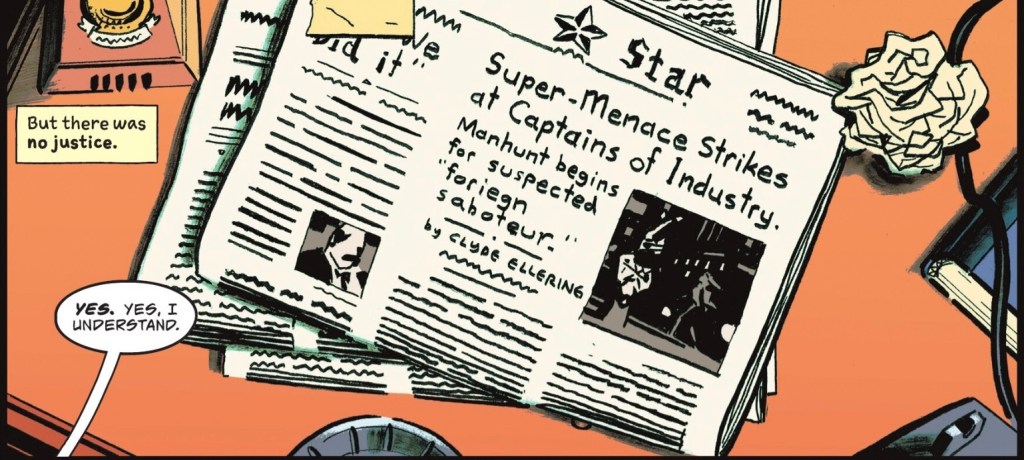
My only real criticism is that the newspaper headlines are too scrappy, making no attempt to look authentic. Worse, the spelling is off – ‘foriegn’? This is a comic with two editors.
Tom Napolitano’s lettering is as sharp as ever, and one detail I like is the way ‘I” when Lois speaks is written like a cursive ‘L’. The woman has style.
And Craig and Wordie’s cover is just gorgeous. That’s a classic Lois.
I don’t know how many issues this series will run for, but if they’re all as great as the first three this could become a perennial favourite.


