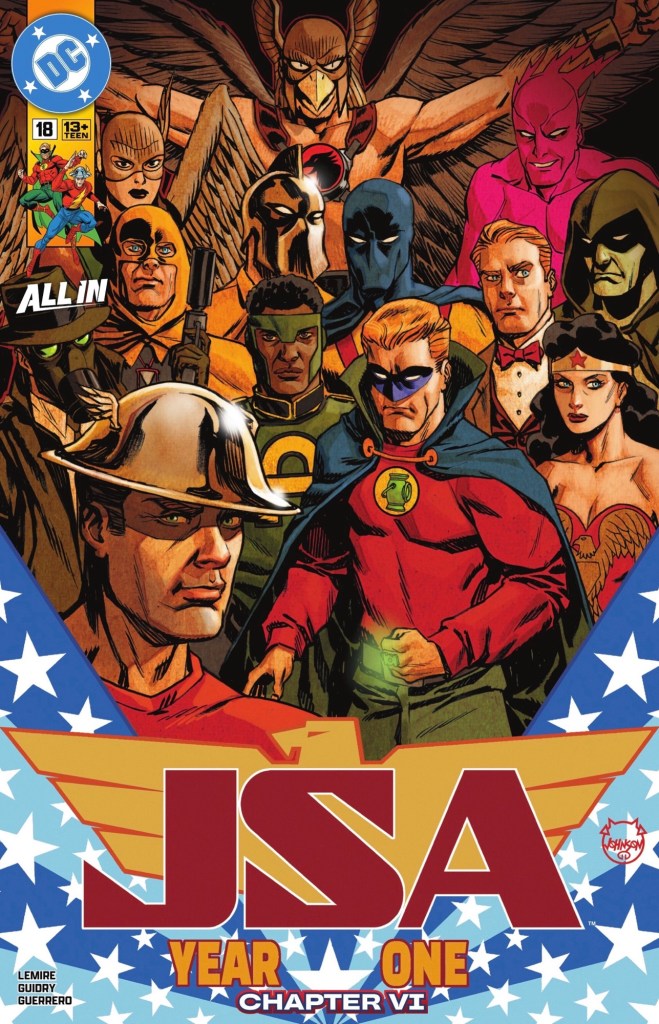
The final chapter of the new origin story that’s occupied this series for the last half a year is, for the most part, a bit of a damp squib. The final few pages are great, but this should be a lot better.
At the close of last issue an explosion blew up the top of the office building occupied by the man whose body the Ultra Humanite recently claimed. In the basement below the structure, the heroes of the future Justice Society face being crushed under the rubble.
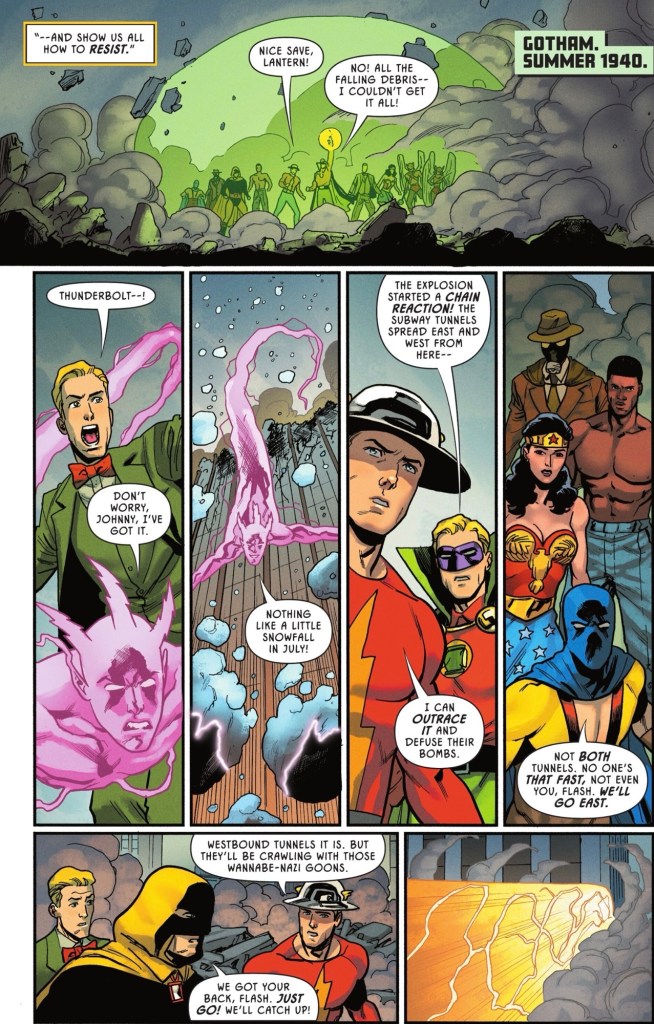
In one of the tunnels, Jay finds a new hero.
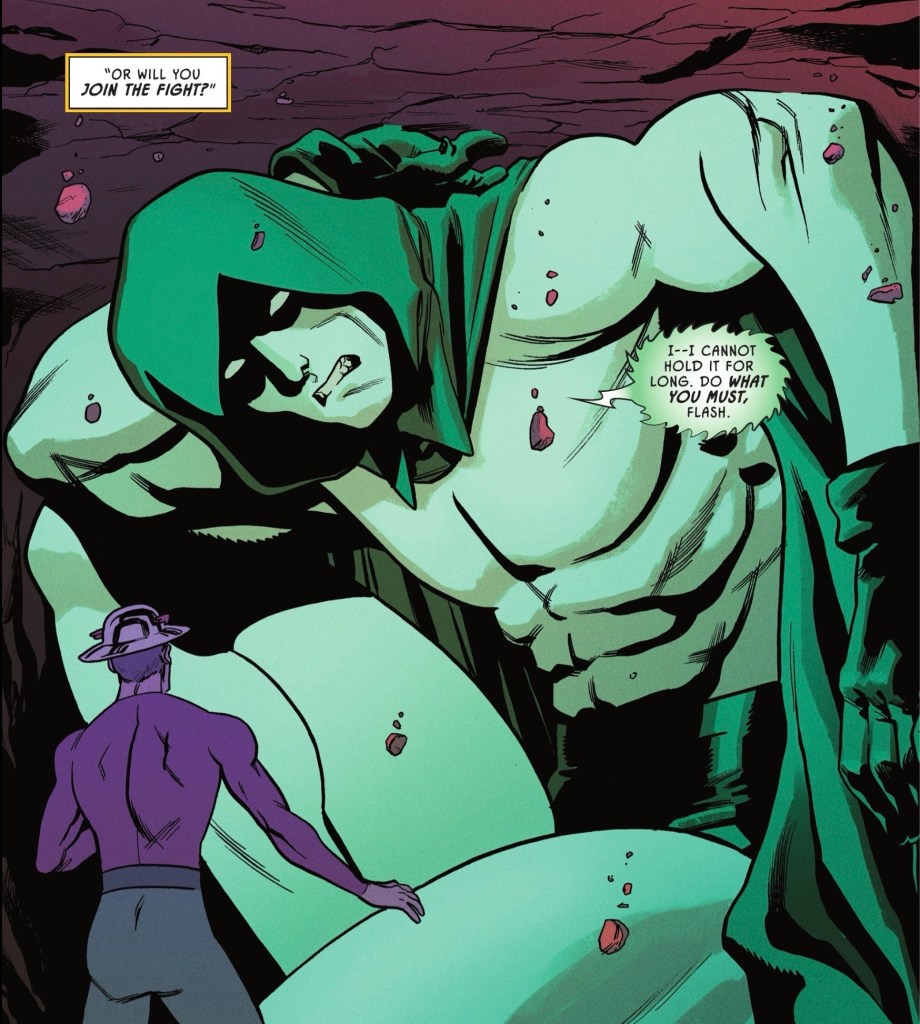
It’s the Spectre, finally released from the body of cop Jim Corrigan. And outside, Green Lantern, Hawkgirl and Hawkman pursue the Ultra Humanite’s fleeing plane. But the mental-powered madman stops GL, and sends the male Winged Wonder plunging to Earth. Cue the appearance of another hero.
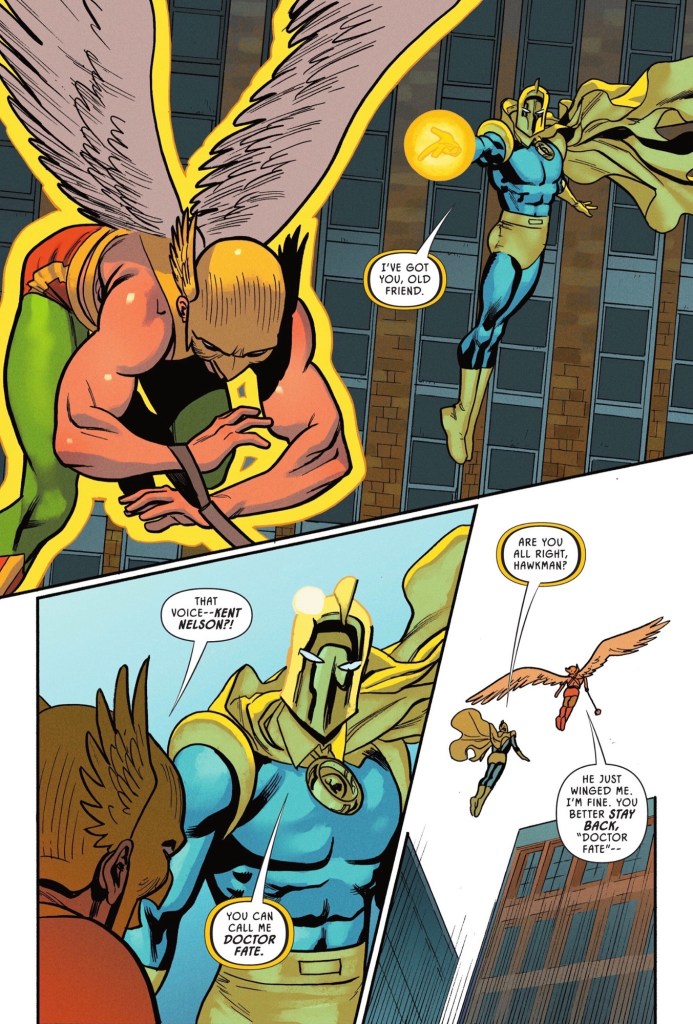
Reluctant bad guy Cyclotron, despite having warned the heroes Ultra-Humanite was more of a threat than they knew, gets no thanks from the recovering Hawkman.
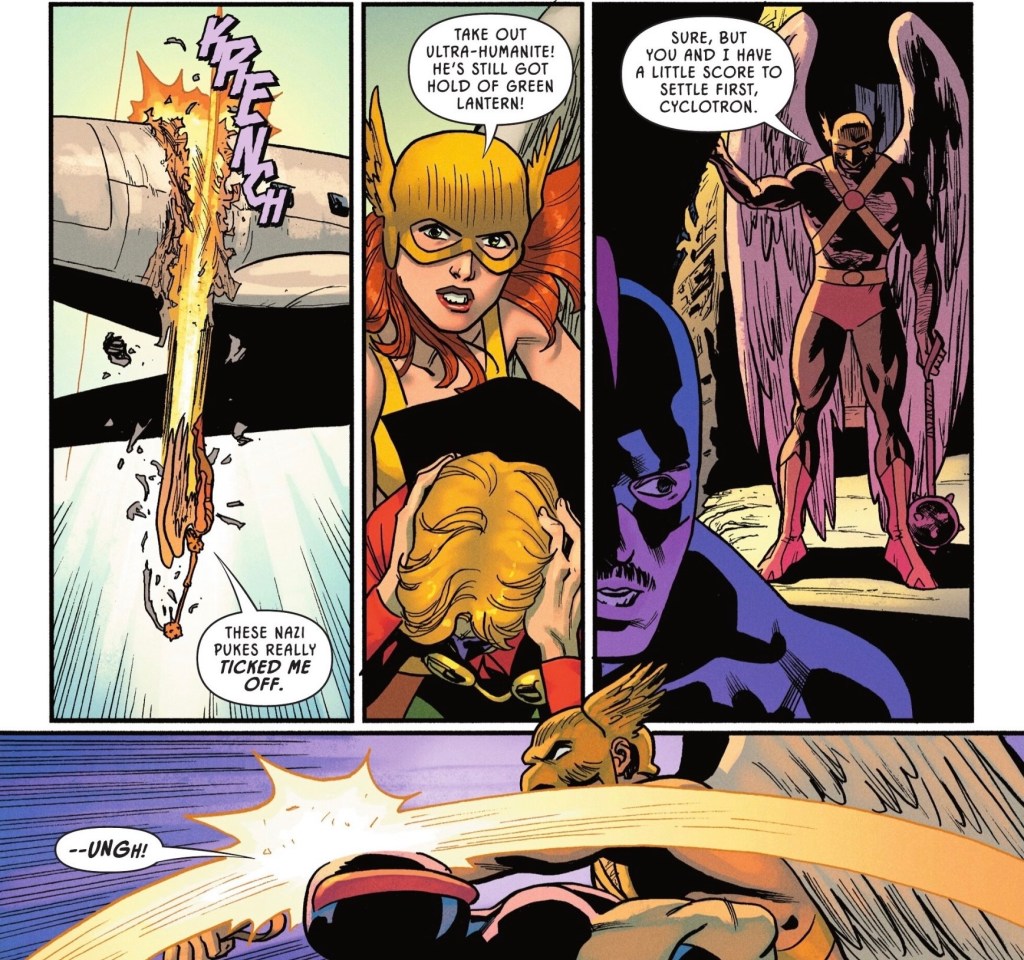
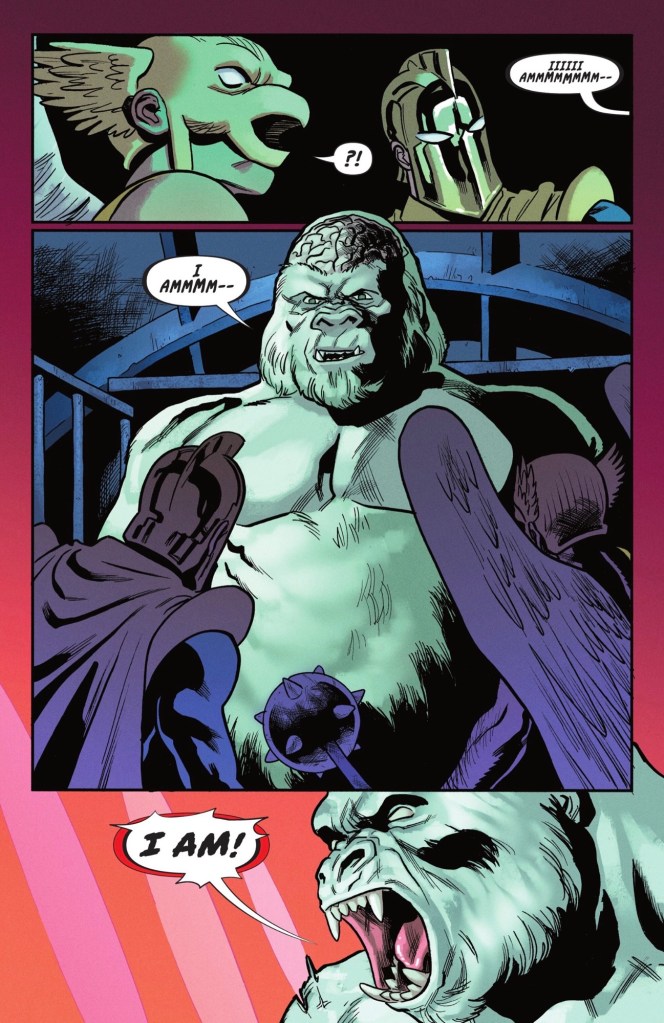
A bit unnecessary, it’s not like Cyclotron was exaggerating, as Hawkman and Dr Fate find out.
Back in one of the tunnels, after swiftly dispatching Ultra Humanite minion Satanna and a trio of randoms, Wonder Woman, Atom and Sandman face the problem of dynamite in the area.
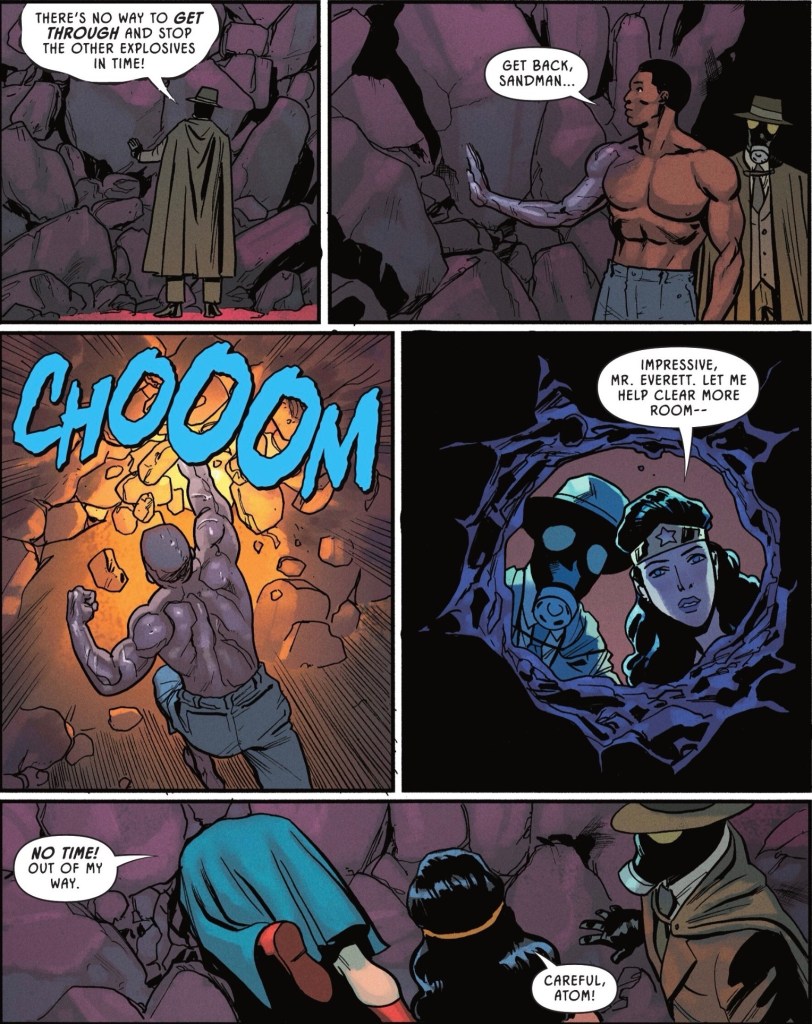
‘Impressive’, Hippolyta? Don’t you mean ‘amazing’?
In another tunnel it’s a similar story for Hourman, Johnny Thunder and Spectre, who deal with Sportsmaster and a couple of goons.
Both teams stop the TNT from going off, then join the rest of the gang to take on the newly hairy Ultra Humanite.
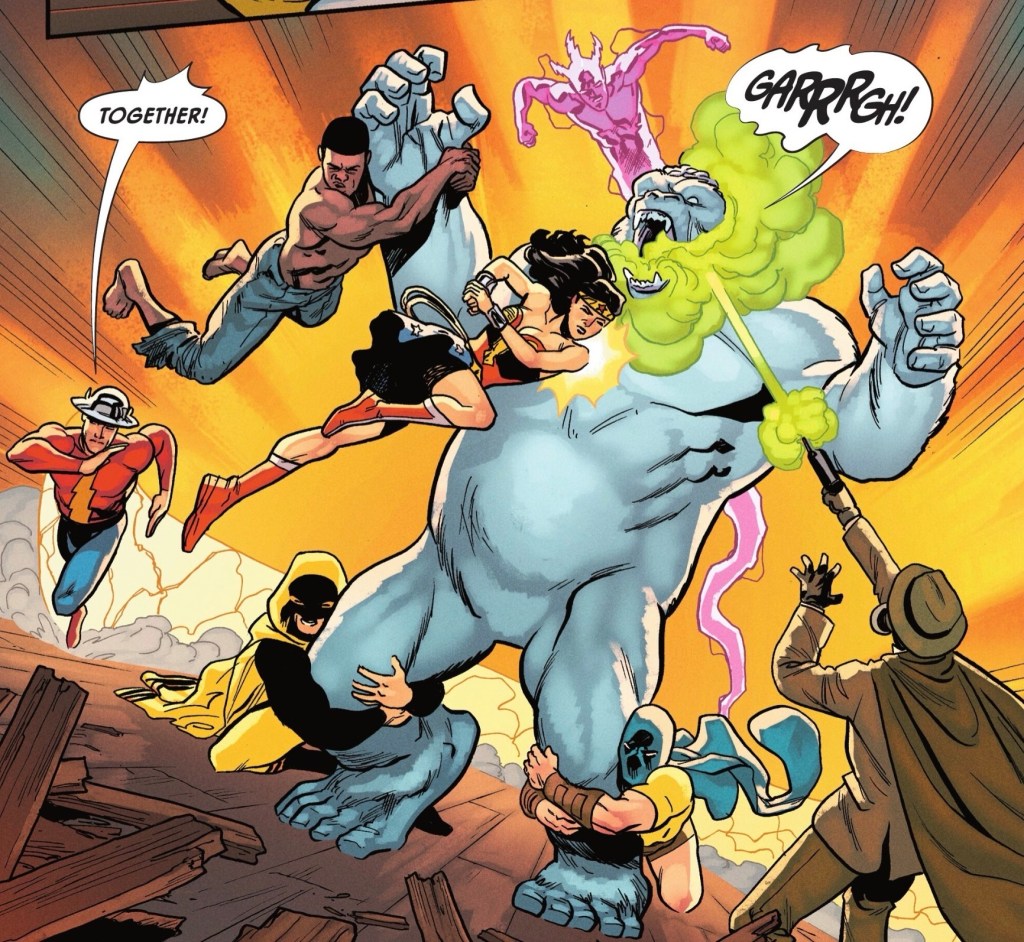
He lasts about ten seconds. There’s nothing to do but stand over his unconscious body and form a club.
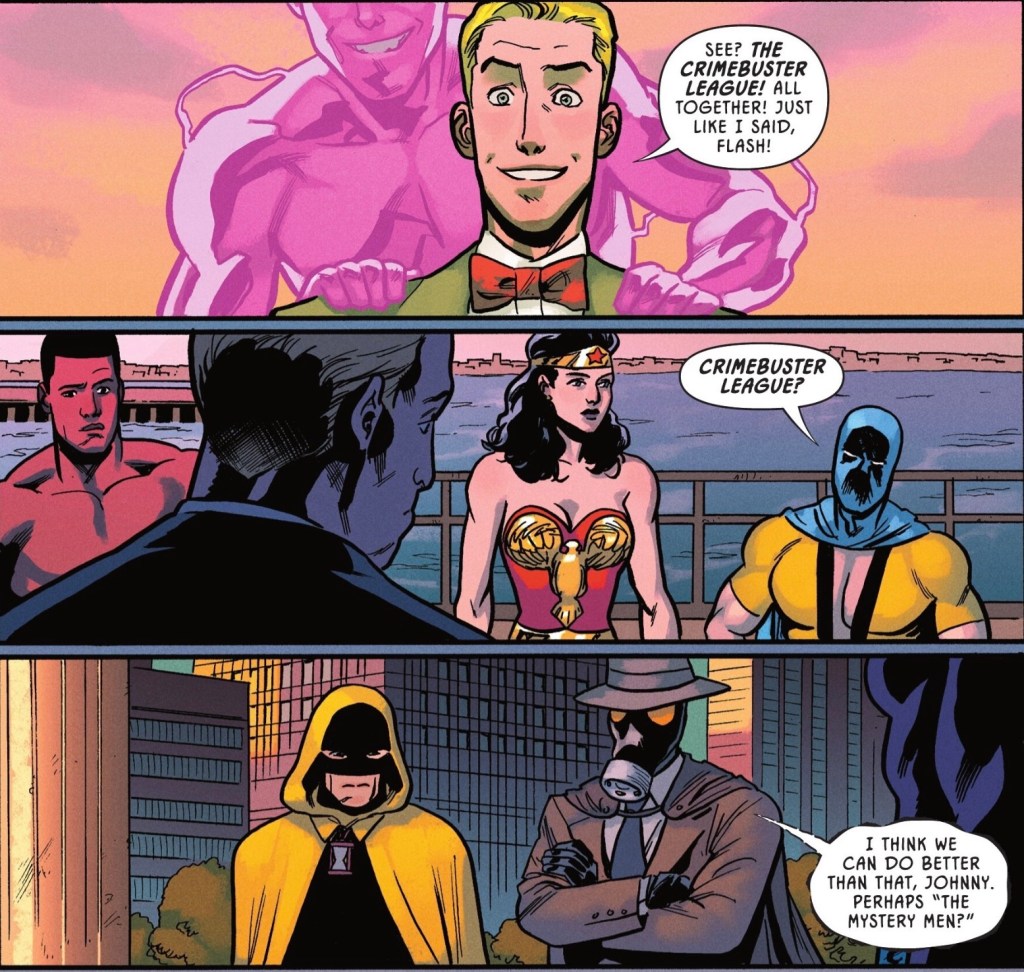
The final four pages of the book are the highlight of the issue, but I’ll let you discover them for yourselves,… oh alright, here’s a moment.
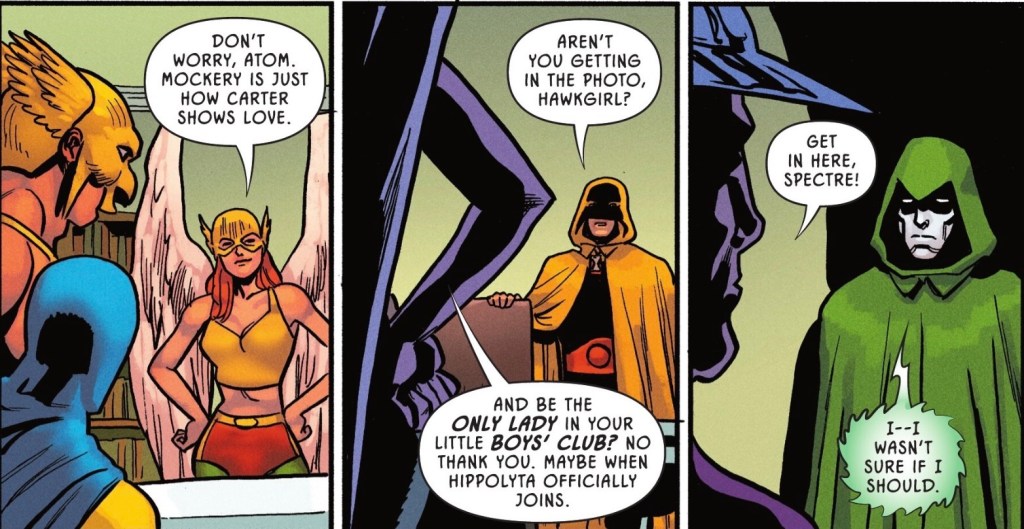
Writer Jeff Lemire cleverly explains away why, despite there being 12 heroes – I’m counting Johnny and his genie as one – the legendary cover of All-Star Comics #3 features just eight.
So, while we’ve had a bigger cast than expected for this secret origin, it’s a tad like the couple of pre-origins of the Justice League seen in the Silver and Bronze Ages – more had happened than we knew, but what we’d seen already was true. This story does change a few details, such as Amazing Man and Cyclotron being around earlier than was established in All-Star Squadron, but it’s not offensive or anything.
My problem with this issue is that where I was expecting a massive blowout between the good guys and bad guys, the heroes spend a fair few pages on the dull tunnels business, while Sportsmaster, Satanna and Cyclotron don’t get to use their powers and abilities before being quickly dispatched, and Ultra Humanite is done in by a basic pile-on. I needed more.
The mentalist gorilla does get to slag off Green Lantern for being gay, without using the word ‘gay’ or any of its Forties synonyms… since DC decided Alan was gay (though the evidence says bi) it’s his whole story. Alan does have a decent riposte to his foe’s ugly words, but the art says Ultra Humanite isn’t awake to hear it.
I admit, All-Star Squadron writer Roy Thomas was sometimes too wordy, but Lemire could usefully give us more. I couldn’t for the life of me remember what the tunnels had to do with anything, and it’s really unclear when Alan is stopped by Ultra Humanite what’s actually happened to him. The book opens and closes with two separate narrators – well, I’m guessing that from the differently toned boxes – but it’s not made clear who they are.
Every hero should have been given a decent showcase moment, which means we needed more villains, and more room for them to shine too; this should have been a double-sized issue. Instead it’s simply the closing chapter of the trade Lemire is writing. I’m supporting this book by buying monthly, and I don’t have to, all I need do is wait a few weeks to read it on DC Infinite Ultra; each chapter should be a discrete nugget of entertainment, with as many expository captions or recap pages as needed.
One surprise is that Hippolyte apparently has popped over from contemporary Paradise Island rather than travelled through time to help the United States fight fifth columnists.
One question is: why is Hawkman as savage as the modern version? Golden Age Carter Hall was never a brute.
As for the art, some of Gavin Guidry‘s work is very decent, other pages look rushed, as if he was speeding towards his new Flash assignment. A million points, though, for a superhero pose I’ve never seen before.
‘Careful, Atom’’ indeed.
Like last time, we get a bonus prelude to the Search for the Spectre storyline starting next issue. I had assumed last month’s was extracted from the upcoming #19, but the key word is ‘Prelude’. I missed that. It seems we’re getting bonus pages – the 22pp main story is followed by four pages of set-up. I like this.
Previously, the current day JSA were trying to come up with a new reason for being. Here, the idea of a training establishment comes up.
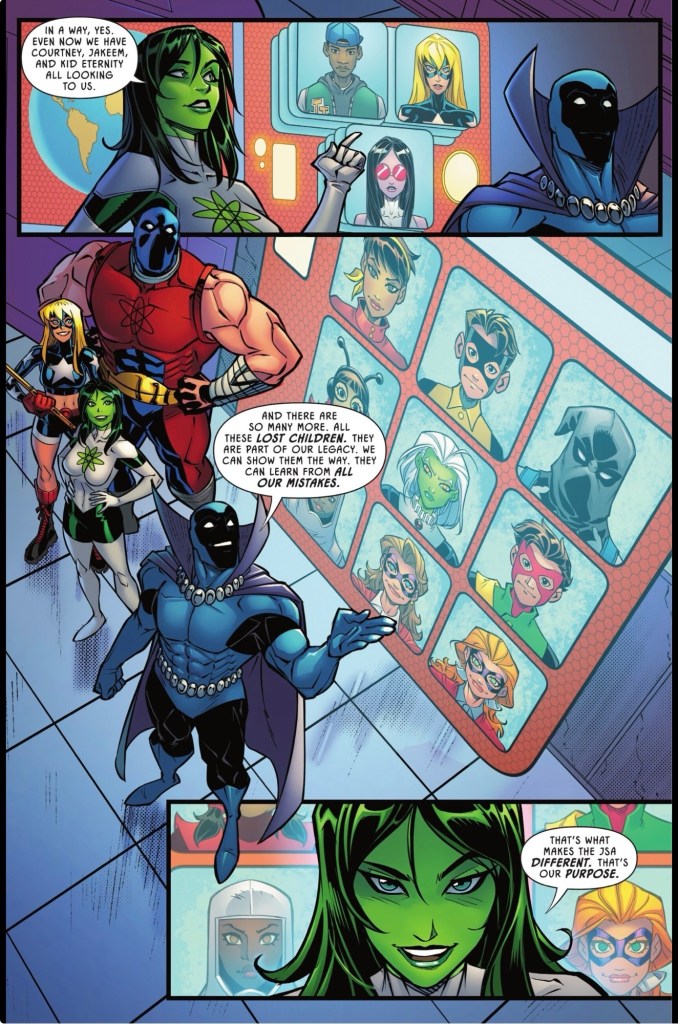
Well, this sounds fun. We also see what the Spectre, so hemmed in by Jim Corrigan’s fears in the Forties story, is up to in 2026, and it’s intriguing. Lemire, artist Joey Vazquez, colourist John Kalisz and letterer Steve Wands have me itching for next month.
Wands also works on the main story, with the excellent colourist Luis Guerrero.
Dave Johnson’s final cover for this storyline is pretty good, but far too sombre for a team formation finale.
Overall, these last six issues have been frustrating – there have been many good moments, but it feels like the Cliffs Notes version of a bigger, better story. If you haven’t experienced these issues, and feel like you should, read ‘em in a lump!

 Too Dangerous For a Girl 2